
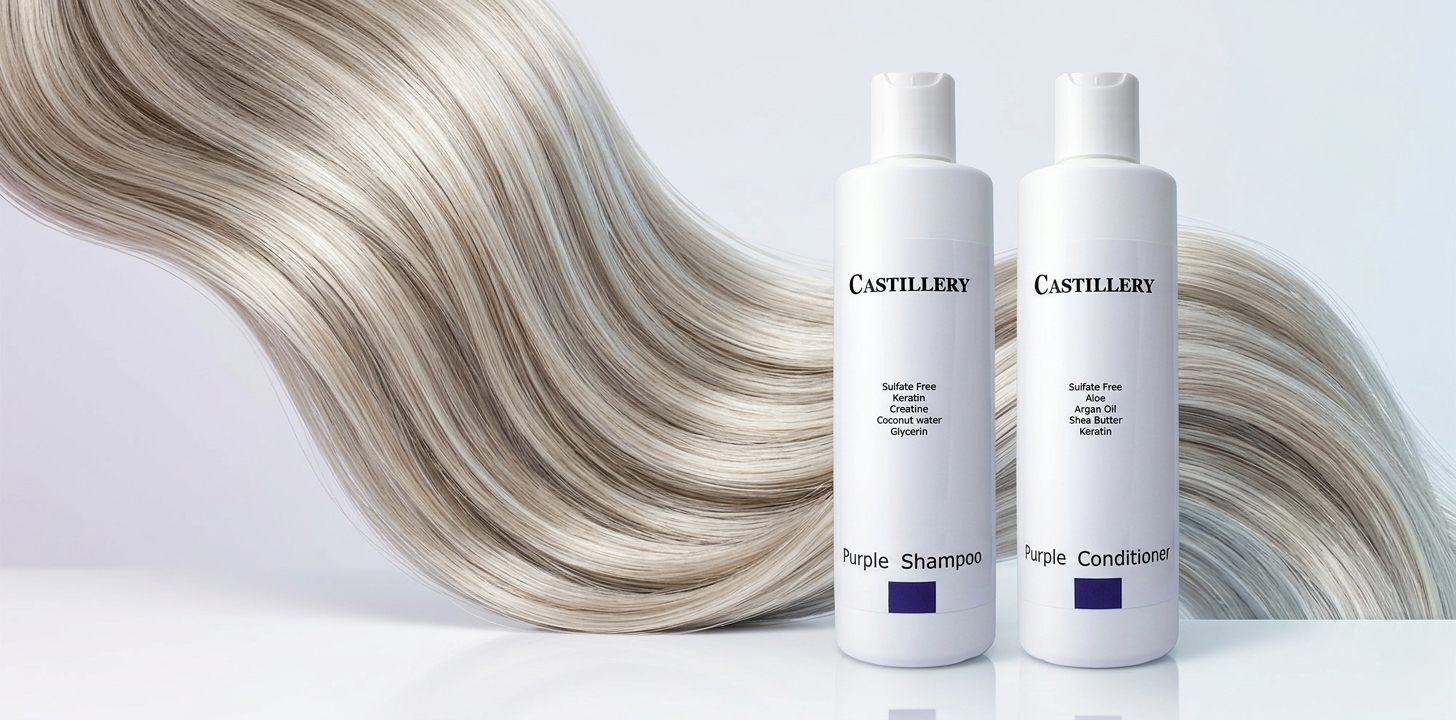
If you’ve ever noticed your beautiful blonde, silver, or grey hair turning brassy or yellow over time, you’re not alone. It’s one of the most common frustrations for anyone with lightened or naturally light hair — and it happens to everyone, regardless of how expensive your salon colour was. The good news is that there’s a simple, effective solution that works at home between salon visits. Purple shampoo South Africa hair lovers are increasingly turning to is more than a trend — it’s an essential maintenance tool for anyone who wants their cool-toned colour to last. Here’s everything you need to know about how it works, who it’s for, and how to use it properly.
What Causes Brassiness in the First Place?
Understanding why hair turns brassy helps you appreciate why purple products work so well. When hair is lightened — whether through bleaching, highlighting, balayage, or natural sun exposure — the process removes the hair’s natural melanin. Beneath that melanin are warm underlying pigments (yellow, orange, and red) that become exposed once the darker pigment is stripped away. Over time, these warm tones become more visible due to several factors:
Hard water minerals: South Africa’s water supply varies significantly by region, and mineral-rich hard water deposits iron and copper onto the hair shaft, accelerating brassiness. Cape Town, Johannesburg, and Durban all have areas where hard water is a known issue for colour-treated hair.
UV exposure: South Africa’s intense sunlight oxidises the hair’s protein structure, pushing warm pigments to the surface faster than in milder climates. This is why blondes in SA often notice brassiness developing faster than expected.
Pollution and product buildup: Environmental pollutants and residue from styling products create a film on the hair that dulls cool tones and amplifies warmth.
Sulfates in conventional shampoos: Harsh sulfates strip colour molecules with every wash, accelerating the fade-to-brass cycle. This is one of the key reasons why a sulfate-free purple shampoo outperforms conventional toning shampoos — it corrects brassiness without simultaneously stripping the colour it’s trying to protect.
How Does Purple Shampoo Work?
Purple shampoo is a toning shampoo for blonde hair infused with concentrated violet pigments. It works on a simple, elegant principle from colour theory: purple sits directly opposite yellow on the colour wheel, which means it neutralises those unwanted warm, brassy tones on contact.
Think of it as a colour filter for your hair. Just as you might adjust the white balance of a photo to remove a yellow cast, purple shampoo adjusts the tone of your blonde, silver, or grey strands to keep them cool, bright, and true to colour. The violet pigments deposit temporarily onto the hair’s surface, counteracting yellow and orange undertones without altering your actual colour underneath. The result is hair that looks freshly toned — salon-bright and cool — without a salon visit.
The intensity of the toning effect depends on two things: the concentration of violet pigment in the formula, and how long you leave it on. A quick 2-minute wash delivers subtle correction, while leaving it on for 5 minutes provides a more dramatic toning effect. This adjustability is what makes purple shampoo so versatile — you control the outcome based on what your hair needs that day.
How Does Purple Conditioner Work?
A purple conditioner works hand-in-hand with purple shampoo, delivering the same violet pigments while providing essential moisture, repair, and nourishment. While the shampoo does the initial cleansing and toning work, the conditioner extends that colour-correcting effect and ensures your hair doesn’t dry out in the process.
This is particularly important because lightened and chemically treated hair is inherently more porous and fragile than virgin hair. It loses moisture faster, breaks more easily, and needs protein replenishment to maintain its structure. A dedicated purple conditioner addresses both toning and treatment simultaneously — something a purple shampoo alone simply can’t do.
Using both together gives you a genuine one-two punch: cleanse and tone with the shampoo, then lock in that cool-toned brightness while deeply conditioning and strengthening.
Who Should Use Purple Hair Care?
Blonde Hair — Natural or Colour-Treated
If you’re blonde — whether from the sun, the salon, or genetics — purple products keep your colour from turning brassy yellow or orange. This is especially important if you have highlights, balayage, or foils, where the contrast between toned and untoned sections becomes very obvious as brassiness develops. A regular purple shampoo for highlights routine keeps every section consistent, bright, and salon-fresh.
Silver and Grey Hair
Natural silver and grey hair can develop yellow undertones from minerals in hard water, pollution, product buildup, and even certain medications. Purple shampoo for grey hair restores that clean, cool silvery tone that makes grey look intentional, elegant, and striking. For the growing number of South Africans embracing their natural grey — the “silver fox” movement is very real — purple products are the essential maintenance tool that keeps grey looking distinguished rather than dingy.
Platinum and White Blonde
The lighter your hair, the more noticeable any warm tones become. Even the slightest hint of yellow shows up dramatically on platinum and white blonde hair. Purple products are absolutely essential for maintaining that ice-white or platinum look between salon visits. Purple shampoo for silver hair and platinum shades needs to deliver strong toning without stripping — which is why a sulfate-free formula matters even more at this end of the blonde spectrum.
Brunettes with Highlights
A lesser-known use: if you’re a brunette with blonde highlights, balayage, or face-framing lighter pieces, purple shampoo keeps those lighter sections cool and bright while the rest of your hair remains unaffected. The violet pigments only deposit onto porous, lightened hair — they won’t alter your darker base colour.
How to Use Purple Shampoo and Conditioner
Knowing how to use purple shampoo properly makes a significant difference to results. Frequency, timing, and technique all matter.
Frequency
You don’t need to use purple products every wash — 1 to 3 times per week is typically enough, depending on how prone your hair is to brassiness. Factors that increase brassiness (and therefore require more frequent use) include hard water areas, regular swimming in chlorinated pools, heavy sun exposure, and very porous, heavily lightened hair.
Application Technique
- Wet your hair thoroughly
- Apply Purple Shampoo and work into a lather
- Leave it on for 2–5 minutes — longer for more intense toning, shorter for a subtle refresh
- Rinse completely
- Follow with Purple Conditioner, distributing evenly through mid-lengths and ends
- Leave conditioner on for 2–3 minutes
- Rinse with cool water to seal the cuticle and lock in the toning effect
Pro tip: Start with once a week and adjust based on results. If brassiness returns quickly, increase to twice a week. If you notice a slight violet tint developing (which can happen with very porous or very light hair), reduce frequency or shorten the leave-on time. Over-toning is temporary and washes out within a few washes — it’s easily correctable.
Common Mistakes to Avoid
Leaving it on too long: More time doesn’t always mean better results. On very porous hair, leaving purple shampoo on for 10+ minutes can result in a noticeable violet cast. Start with 2–3 minutes and build up.
Using it on dry hair: Always apply to wet hair. Purple shampoo distributes unevenly on dry strands and can create patchy toning.
Skipping conditioner: Toning without conditioning leaves hair dry and brittle. The conditioner isn’t optional — it’s the step that ensures your hair is nourished while being toned.
Using a sulfate-based purple shampoo: This is the most counterproductive mistake. A purple shampoo that contains sulfates tones your hair while simultaneously stripping the colour it’s trying to protect. You end up chasing your tail — toning to correct brassiness that the shampoo itself is accelerating. A sulfate-free purple shampoo breaks that cycle entirely.
What Makes the Best Purple Shampoo?
Not all purple shampoos are created equal. The best purple shampoo does three things well: it tones effectively, it protects colour, and it actually cares for the hair. Most conventional purple shampoos only do the first — they deposit violet pigment while using the same sulfates and harsh detergents as any other shampoo, which means your colour fades faster even as the brassiness is corrected.
The Castillery Purple Shampoo takes a fundamentally different approach. It’s formulated as an anti-brass shampoo that also happens to be a genuine treatment:
- Keratin and creatine rebuild the protein structure that bleaching and colouring break down, actively strengthening hair with every wash
- Coconut water delivers lightweight, deep hydration without weighing down fine, lightened hair
- Caffeine stimulates scalp circulation, promoting healthier, more vigorous growth from the root
- D-Panthenol (Vitamin B5) improves flexibility, adds shine, and prevents moisture loss between washes
The Purple Conditioner continues the treatment with argan oil, shea butter, and keratin — providing the deep repair and nourishment that chemically processed hair needs alongside the toning benefits. Together, they deliver what most purple products can’t: colour correction and genuine hair health in the same routine.
Both are completely sulfate-free, salt-free, paraben-free, and silicone-free — formulated to protect your colour investment rather than undermine it.
Purple Shampoo and South African Water
South African water conditions make purple shampoo even more important than in other countries. Hard water — particularly in parts of Gauteng, KwaZulu-Natal, and the Western Cape — deposits iron and copper minerals onto the hair shaft that accelerate brassiness and create a dull, yellowish film that regular shampooing doesn’t fully remove.
For an even more thorough reset, using the Clarifying Shampoo once a month before your purple shampoo routine strips away accumulated mineral deposits and product buildup, giving the violet pigments a clean surface to work on. The difference is immediately visible — your purple shampoo works harder and the results last longer when it’s applied to genuinely clean hair.
Building a Complete Blonde and Silver Hair Routine
Purple shampoo and conditioner are the foundation, but a complete routine for lightened hair includes a few other elements:
Toning days (1–3 times per week): Purple Shampoo + Purple Conditioner
Non-toning wash days: Hydra Boost Shampoo + Hydra Boost Conditioner for deep hydration that chemically processed hair craves
Monthly deep cleanse: Clarifying Shampoo to strip mineral buildup before your toning routine
Daily protection: Leave-In Conditioner to hydrate, detangle, and protect against heat and environmental damage between washes
This combination ensures your hair is toned, nourished, protected, and genuinely healthy — not just cool-toned on the surface while dry and damaged underneath.
Ready to Banish the Brass?
Brassiness is inevitable for anyone with lightened hair, but it doesn’t have to be permanent. A consistent purple shampoo routine — especially one built on a sulfate-free, treatment-focused formula — keeps your colour cool, bright, and salon-fresh without the salon price tag. The only question is whether you’re going to keep fighting brassiness with products that strip your hair in the process, or switch to something that tones and treats at the same time.
Explore the Purple Shampoo and Purple Conditioner, plus the full range of sulfate-free hair care — all formulated in Cape Town for hair that deserves both beautiful tone and genuine health.