
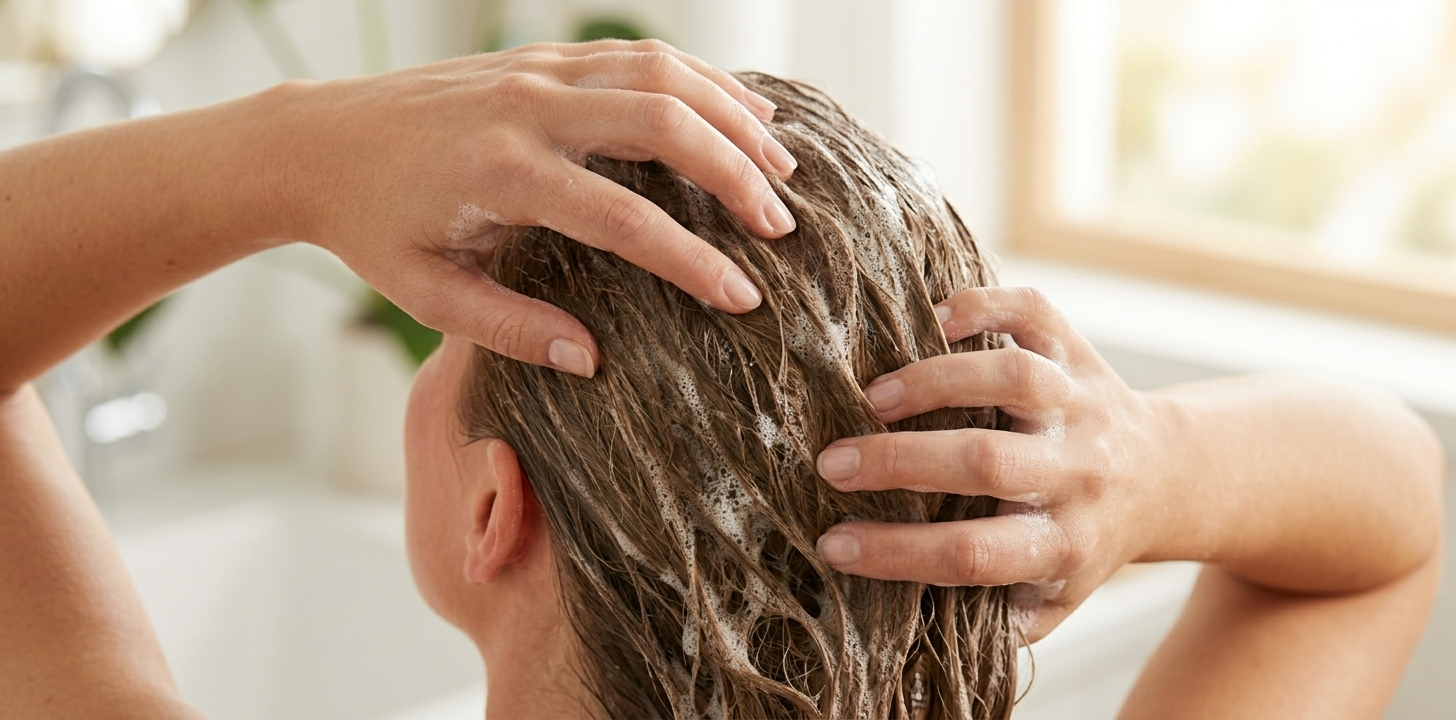
For years, hair care has been almost entirely about the hair itself — shine, softness, volume, frizz control. But a fundamental shift is happening, both globally and right here in South Africa. Consumers, dermatologists, and formulators alike are arriving at the same conclusion: truly healthy hair starts at the scalp. If the scalp isn’t balanced, nourished, and properly cared for, no amount of conditioner, serum, or styling product will deliver the results you’re looking for.
Think about it this way — your scalp is skin. It’s the foundation from which every single strand of hair grows. And just like the skin on your face, it needs to be cleansed gently, kept hydrated, protected from irritation, and treated with ingredients that actually do something. The rise of scalp health South Africa consumers are paying attention to isn’t a passing trend — it’s a long-overdue correction in how we think about hair care from the ground up.
Why Scalp Health Has Been Overlooked
The traditional approach to hair care focused almost exclusively on the hair fibre — the visible strand. Shampoos were designed to strip, conditioners to coat, and styling products to hold. The scalp was treated as an afterthought, something that just needed to be “clean enough” before moving on to the real business of making hair look good.
The problem is that this approach ignores the biology of hair growth. Every strand of hair emerges from a follicle embedded in the scalp. The health of that follicle — its blood supply, its nutrient access, its freedom from inflammation and buildup — directly determines the quality, strength, and growth rate of the hair it produces. A congested, irritated, or imbalanced scalp produces weaker, thinner, slower-growing hair. A nourished, balanced scalp produces stronger, thicker, healthier hair. It really is that straightforward.
The Signs Your Scalp Is Trying to Tell You Something
Many common hair frustrations — persistent oiliness, dryness, flakiness, thinning, slow growth, even hair loss — are actually scalp problems rather than hair problems. Here are some signals worth paying attention to:
Excess oil by midday: If your hair looks greasy hours after washing, the issue likely isn’t your hair — it’s your scalp overproducing sebum, often in response to harsh sulfates stripping it too aggressively. The scalp panics and compensates by producing even more oil.
Persistent flaking or itching: This can signal a disrupted scalp moisture barrier, often caused by sulfates, parabens, or silicone buildup that prevents the scalp from regulating itself naturally.
Thinning or slow growth: Poor scalp circulation means fewer nutrients reach the follicle, resulting in weaker strands that break easily and grow more slowly than they should.
Sensitivity or tightness after washing: A scalp that feels tight, dry, or uncomfortable after shampooing is telling you that your current products are too harsh for your skin.
Ingredients That Actually Support Scalp Health
Once you start thinking of your scalp as skin that deserves the same care as your face, the ingredient conversation changes completely. Here are some of the most effective scalp-supporting ingredients in modern hair care — and why they matter.
Niacinamide (Vitamin B3)
If there’s one ingredient that exemplifies the scalp-first approach, it’s niacinamide. Already a superstar in facial skincare for its ability to reduce pores, balance oil, and strengthen the skin barrier, niacinamide delivers exactly the same benefits when applied to the scalp. It regulates sebum production — reducing excess oil on oily scalps while helping dry scalps retain hydration. It soothes inflammation, supports keratin production, and creates the conditions for healthier, stronger hair growth over time.
This is why niacinamide is the lead active in both the Balance Shampoo (formulated specifically for oily scalps) and the Active Care Shampoo (designed for frequent washing). In both cases, niacinamide works at the scalp level first, and the hair benefits follow naturally.
Caffeine
Caffeine stimulates microcirculation directly at the scalp, increasing blood flow to hair follicles and boosting the delivery of oxygen and nutrients where hair growth actually begins. Research shows that caffeine applied topically can help counteract the effects of sluggish circulation, encouraging stronger, more vigorous growth over time. It’s particularly valuable for anyone noticing thinning, slow growth, or a scalp that feels generally “sluggish.”
Caffeine features across several formulas — from the Balance Shampoo and Hydra Boost Shampoo to the Purple Shampoo — because scalp circulation benefits every hair type, not just one.
Chamomile and Aloe Vera
Two of nature’s most trusted anti-inflammatory botanicals, chamomile and aloe vera work together to calm irritated scalps, reduce redness, and deliver lightweight hydration without triggering excess oil production. For sensitive scalps that react to harsh products, this combination provides immediate relief and ongoing comfort. They feature throughout the hair care range precisely because scalp soothing should be a baseline, not a bonus.
Apple Cider Vinegar and Bentonite Clay
Even the healthiest daily routine can’t prevent all buildup. Hard water minerals, styling product residue, pollution particles, and excess sebum accumulate over time, clogging follicles and disrupting the scalp’s natural balance. Apple cider vinegar restores scalp pH and dissolves mineral deposits, while bentonite clay acts as a magnet for deep-seated impurities. Together, they provide the kind of thorough scalp detox that a monthly Clarifying Shampoo treatment delivers — clearing the way for your daily products to work more effectively.
D-Panthenol (Vitamin B5)
D-Panthenol penetrates both the scalp and the hair shaft, delivering hydration from within while strengthening the skin’s natural barrier function. On the scalp, this means better moisture retention, reduced sensitivity, and a healthier environment for hair growth. On the hair itself, it improves flexibility, reduces breakage, and adds shine. It’s an ingredient that bridges the gap between scalp care and hair care seamlessly.
What Your Shampoo Shouldn’t Contain
The scalp-first approach isn’t just about adding beneficial ingredients — it’s equally about removing the harmful ones. Many common shampoo ingredients actively work against scalp health:
Sulfates (SLS, SLES) are aggressive detergents that strip the scalp’s natural oils, disrupting its moisture barrier and often triggering rebound oil production. They’re the main reason so many people feel caught in a cycle of washing daily yet never feeling clean enough.
Parabens are synthetic preservatives that can irritate sensitive scalps and have been linked to broader health concerns. When safer preservation methods exist, there’s simply no reason to use them.
Silicones coat the hair and scalp in a synthetic film that blocks moisture absorption and traps buildup against the skin. Over time, this suffocates the scalp and prevents active ingredients from reaching the follicle where they’re needed most.
Salt dehydrates the scalp, increases sensitivity, and can accelerate colour fading in treated hair.
This is exactly why every product in the range is formulated without all four — sulfate-free, salt-free, paraben-free, and silicone-free. It’s not a marketing claim; it’s a scalp health decision.
Building a Scalp-First Routine
The good news is that switching to a scalp-first approach doesn’t mean overhauling your entire routine. It means choosing your shampoo and conditioner based on what your scalp needs, not just what your hair looks like. Here’s a simple framework:
If your scalp is oily: Start with the Balance Shampoo — niacinamide regulates oil production over time rather than stripping it. Pair with the Ultra-Light Conditioner on mid-lengths and ends only to avoid adding weight at the roots.
If your scalp is dry or sensitive: The Hydra Boost Shampoo delivers water-based hydration with coconut water and glycerin — lightweight moisture that soothes without coating. Follow with the Hydra Boost Conditioner for deep, oil-based nourishment.
If you wash frequently: The Active Care Shampoo is built for daily use, with niacinamide, chamomile, and aloe keeping the scalp comfortable and balanced even with frequent washing.
Once a month, regardless of hair type: Use the Clarifying Shampoo with soapnut, apple cider vinegar, and bentonite clay to clear accumulated buildup and reset the scalp completely.
The Bottom Line
Your scalp is the soil from which your hair grows. Feed it well, protect it from irritation, keep it clean without stripping it, and the hair that grows from it will be stronger, healthier, and more beautiful than anything a surface-level product can deliver. The shift toward scalp health isn’t a trend — it’s the future of hair care. And for those of us in South Africa, where hard water, intense sun, and active outdoor lifestyles put extra demands on our scalps, paying attention to what touches that skin has never been more important.
Explore the full range of sulfate-free shampoos and conditioners, all formulated with scalp health as the starting point.